The Best Time for a Helicopter Tour in Tokyo
When to fly over Tokyo by helicopter: sunset for both the city and its lights, winter for Mount Fuji, after 19:00 for Tokyo Tower at night, and the rainy and typhoon seasons to plan around.
The best time for a Tokyo helicopter tour is the half hour around sunset, when you see the city by daylight and then watch its lights come on; for Mount Fuji, fly on a clear morning between November and February. After dark is best for the towers lit up, but on the flights from Chiba a slot before 19:00 may not be able to head towards Tokyo Tower. The weather to plan around is the rainy season in June and July and the typhoons of late summer.
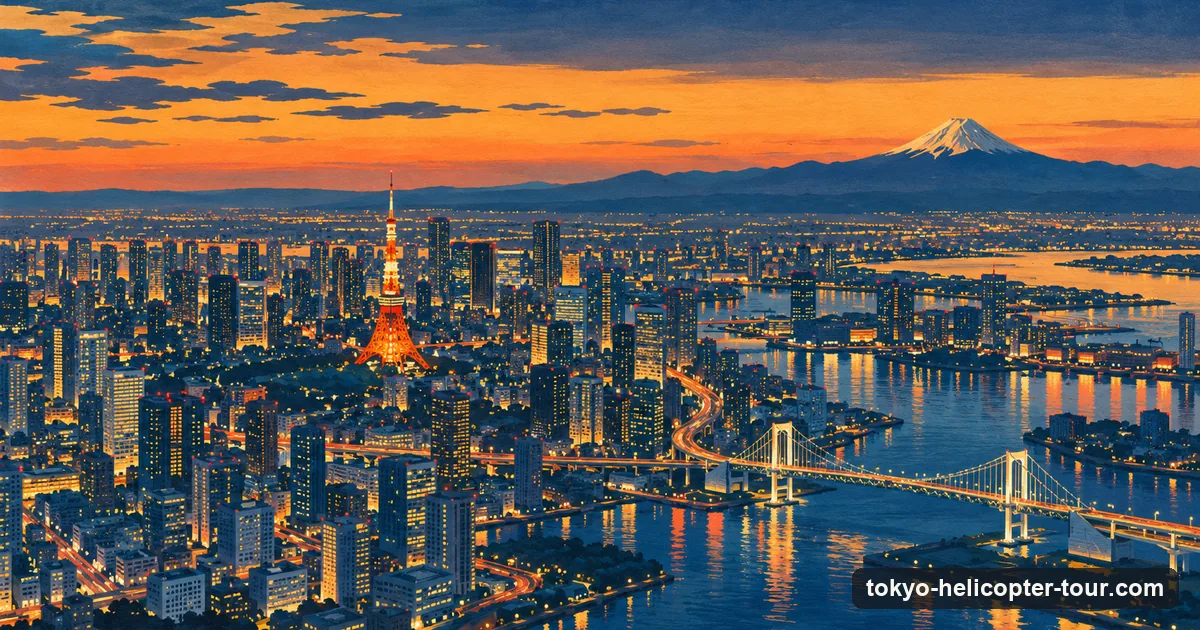
Day, sunset or night
| Time | You see | Best for |
|---|---|---|
| Daylight | The layout of the city, the bay and its bridges, and Fuji on clear days | First-timers, photos, Fuji |
| Sunset | Both: the city in the last light, then the lights coming on | Proposals, the best of both |
| Night | Tokyo Tower and the Skytree lit up, the bay shore, Shinjuku and Shibuya | The lights, a special evening |
Sunset in Tokyo is around 4.30 pm in December and 7 pm in late June. On the Skytree and Tokyo Tower flight and the night flight, a slot before sunset flies in daylight, and a slot before 19:00 may not be able to head towards Tokyo Tower because of flight restrictions; staff then offer another time or a full refund. In winter, 19:00 is already full dark; in June it is the sunset hour.
Mount Fuji: November to February
Fuji is visible from central Tokyo on more than 120 days a year, but most of them are in the cold, dry months, when the snow cap is on and the air is clear; summer haze and cloud hide it most of the time. Mornings are usually clearer than afternoons, and a sunny day in the city does not guarantee a clear summit. The Mount Fuji page has the flights that go to the mountain; on the city flights it is a bonus on the horizon.
Season by season
- Winter (December to February): the clearest air, early dark for night flights, and the best Fuji odds. Cold on the pad, warm in the cabin.
- Spring (March to May): cherry blossom along the rivers and parks in late March, around 26 to 27 March in 2026, and spring haze that can soften the views.
- Rainy season (June to mid-July): in 2026 it ran from about 7 June to 20 July. Flights still go between showers; one reviewer flew in the rainy season with a typhoon approaching and had a clear night.
- Summer and typhoons (July to October): hot and hazy by day, better after dark; typhoons bring the most cancellations, usually from August to October.
- Autumn (October and November): settled, often clear weather and autumn colours in the parks in late November.
What cancels a flight
Strong wind, low cloud, heavy rain and lightning. The operator or captain decides on the day, sometimes after you have reached the heliport, and you are offered another date or a full refund; on the night flight that refund comes with no fee. Every Tokyo flight on GetYourGuide also has free cancellation up to 24 hours before, so watch the forecast and move the date yourself if a storm is coming. Book early in your trip so there is a spare day to fly again.
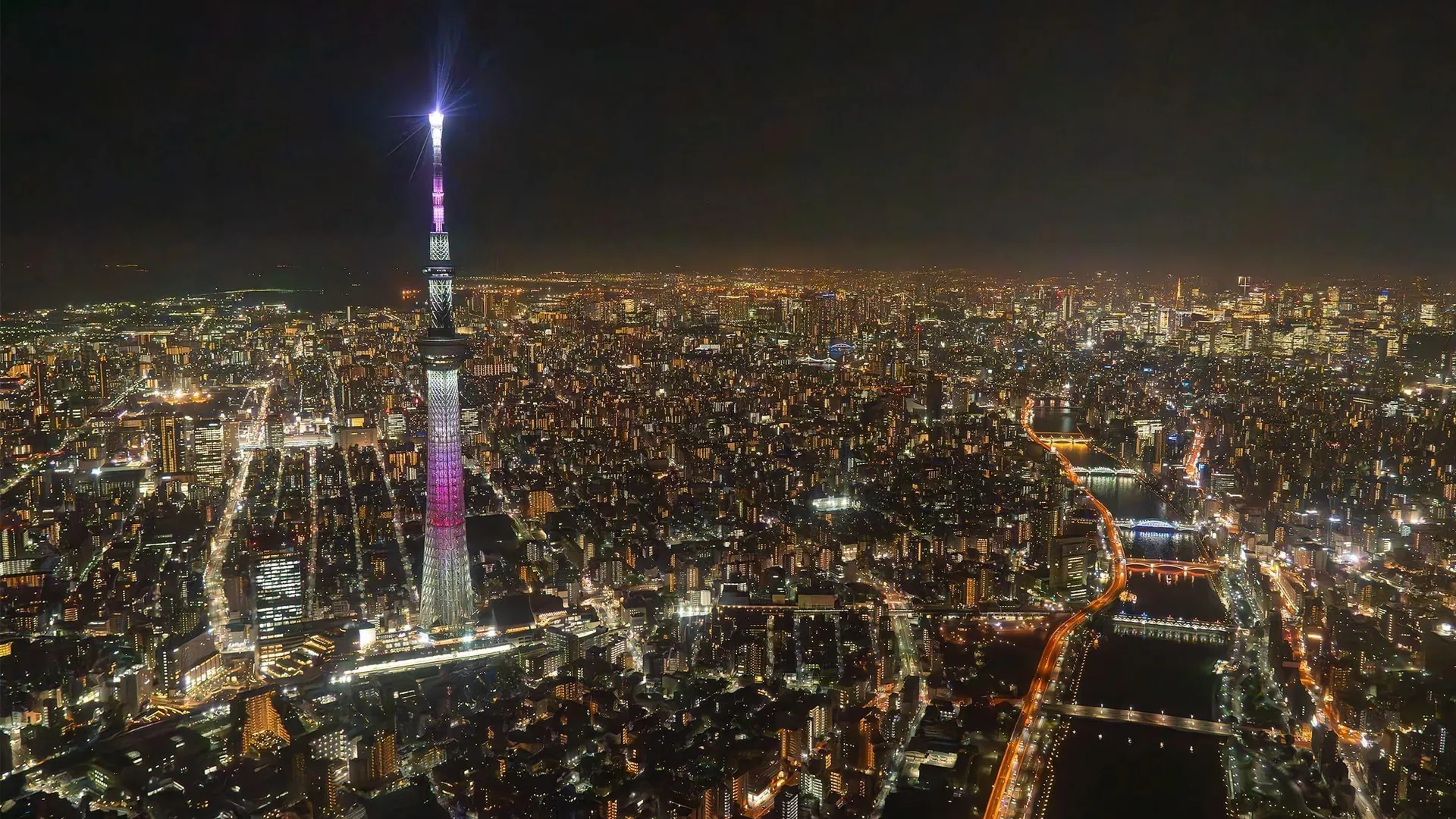
Fifty Minutes Over Tokyo at Night
The 50-minute Premium Night Flight is a private charter for one to four over Tokyo Tower, the Skytree, Shinjuku and Shibuya, from Chiba Wangan Heliport. New on GetYourGuide, from US$598 a person as of October 2026, with free cancellation up to 24 hours before.
Check Night Flight Dates